The Companion Line Item: Pricing a VIP Guest Pass at the Tournament Cage
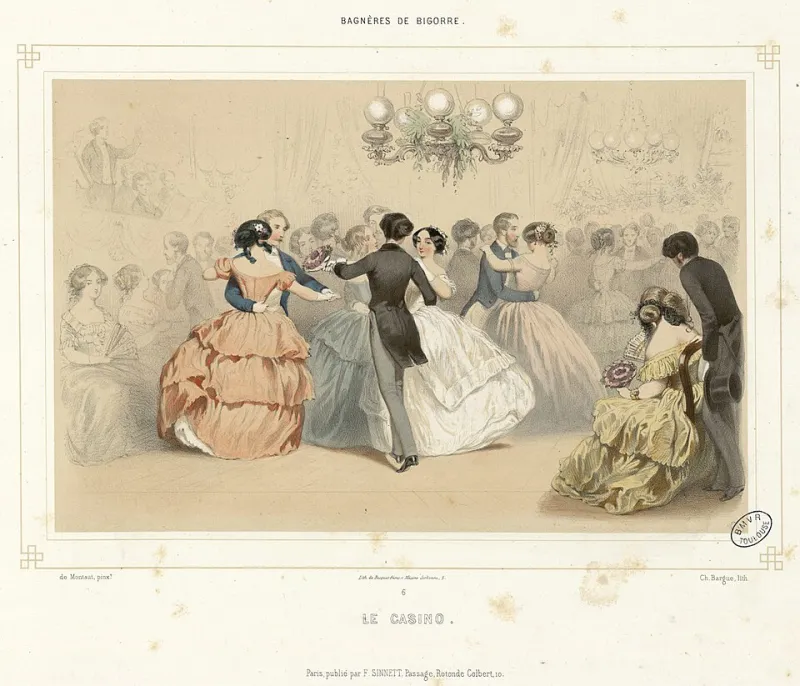
Photo: Henri de Montaut, Public domain, via Wikimedia Commons
Premium casino offers are usually presented as a stack of obvious numbers: free play, tier credits, tournament entries, and resort credit. The guest pass is different. It rarely has a stated cash value, and it often appears at the bottom of a VIP menu under language that sounds generous but stays deliberately vague. For readers weighing a higher tier in 2026, the useful question is not whether a plus-one privilege sounds exclusive. It is what the companion would actually receive, what those items would cost to buy separately, and how much of that value survives the program rules.
A Guest Pass Is a Bundle, Not a Benefit
At US casinos, plus-one access can mean almost anything. In one VIP program it may cover a companion meal in the steakhouse and a seat at the property lounge. At another, it may include a second person in the room, access to a tournament welcome reception, and preferred viewing during the event. At a third, it may mean little more than permission to stand near the tournament cage while the member registers. The label is similar; the substance is not.
That is why a guest pass should be audited as a bundle. Each element has its own retail substitute, its own restrictions, and its own likelihood of being used. A companion dinner is not worth much to a player traveling alone. A room upgrade is not worth much when the upgrade is subject to availability and the property is sold out. Tournament observation is not a tournament entry, and it should never be valued as though the companion can play, earn points, or share in a prize.
Meals, Lounges, and the Daily Allowance
Companion dining is often the most tangible part of the package. At premium US properties, a dinner for two in a casino steakhouse can easily fall between $150 and $300 before gratuity, depending on market and wine. Lounge access may replace a $50 to $100 per-person spend on drinks and light food. These figures are not automatic savings. They matter only if the member and guest would otherwise pay for the same meal or lounge visit.
The fine print also matters. Many passes cover food but exclude alcohol, gratuity, tax, or premium menu items. Some cap the companion allowance at a daily figure. Others require the member to be present for the charge, which means the guest cannot use the benefit independently. A realistic valuation should begin with the conservative menu price, then subtract the costs the pass does not cover.
Room Upgrades and Event Seating
A companion may be included in the member's room, but that is not the same as a room upgrade. When a suite or premium-view upgrade is genuinely included and available, the retail difference can range from roughly $100 to $400 per night in major markets. In practice, upgrade inventory is limited, blackout dates are common, and the member may already hold the better room. The marginal value is therefore lower than the brochure suggests.
Event access is similarly uneven. A tournament welcome reception, a hosted concert, or a VIP drawing party may have a face value of $75 to $250 per person. If the companion would have attended anyway, the pass has real value. If the event is a brief reception with limited seating, the value is mainly social. Readers should ask whether the guest receives a confirmed seat or only general access, and whether the event is included in the tournament package regardless of tier.
Tournament Observation Is Not Tournament Participation
Slot tournaments create some of the most confusing guest-pass language in the VIP catalog. A companion may be allowed to watch the tournament floor, attend the draw, or join a reception. That access can improve the trip, but it does not create a second entrant. The companion does not receive tournament credits, does not spin on the member's machine, and does not share in the prize pool unless the rules explicitly say so.
This distinction is central to valuation. A tournament entry has a buy-in value and a prize-equity component. A guest pass has neither. At the cage, the companion is a spectator and a social guest. Any article or host presentation that blends the two is using the excitement of the tournament to inflate the worth of a much smaller privilege.
A Practical Valuation Framework
A defensible estimate uses replacement cost and then applies a reality discount. First, list only the items the companion would actually use. Second, assign a conservative retail value based on what the member would pay without the pass. Third, reduce that figure for availability risk, blackout dates, and nontransferable rules. Fourth, subtract gratuities, taxes, resort fees, and any spending the pass does not cover. Finally, compare the remaining value with the additional play or spend required to reach the tier.
A sample two-night premium trip might look like this:
| Line item | Conservative retail range |
|---|---|
| Companion dinners, two nights | $250 to $500 |
| Lounge access | $100 to $200 |
| Room upgrade, two nights | $200 to $600 |
| Event or reception access | $150 to $400 |
| Tournament observation | $0 to $100 |
The gross range is wide, but the usable range is narrower. After restrictions and incremental costs, many companion packages are worth roughly $300 to $900 for a trip where the guest attends and uses most benefits. That is a reasonable planning figure, not a promise. A local companion who skips the room and dinner may extract far less. A traveler who would have paid for the same meals and upgrade may extract more.
Where the Value Collapses
The guest pass loses value quickly when it cannot be used. If the companion cannot travel, the benefit is worth zero. If the member already receives the same dinner or lounge access, the pass adds no marginal value. If the tier requires a substantial increase in coin-in, the companion benefit may be a small fraction of the extra cost. Blackout dates, same-room requirements, age limits, and nontransferable rules all reduce practical worth.
The pass also should not be treated as a rebate. It is a hospitality benefit, not cash back and not a reduction in the theoretical cost of play. Members who would not otherwise book the dinner, attend the reception, or take the upgrade should value the pass at the lower end of the range.
Questions to Put to the Host
Before chasing a tier for a plus-one privilege, ask for the specifics in writing. Which meals are covered, and is gratuity included? Is the lounge access daily or once per trip? Is the room upgrade confirmed or subject to availability? Does the companion receive a seat at the tournament reception, or only general access? Is the pass valid on holiday weekends? Can it be used when the member is not present? What is the exact spend or play difference between the current tier and the next one?
At Club Riches, the neutral conclusion is straightforward. A VIP guest pass can be a meaningful perk for players who travel with a companion and will use the meals, room, and event access. For everyone else, it is a soft benefit with a modest dollar value. The sensible approach is to price it like any other line item: conservatively, after restrictions, and only for the trips you actually plan to take in 2026.